





Wealth inequality can be solved
Mumbai.: Noted international economist, Pavan Sukhdev, who headed the UN’s Green Economy Initiative and led the G8+5 report called The Economics of Ecosystems and Biodiversity (TEEB) said India had enough ‘brain power’ to solve its’ own problems of wealth-inequality, ecological degradation and resultant huge loss of ‘natural capital’.
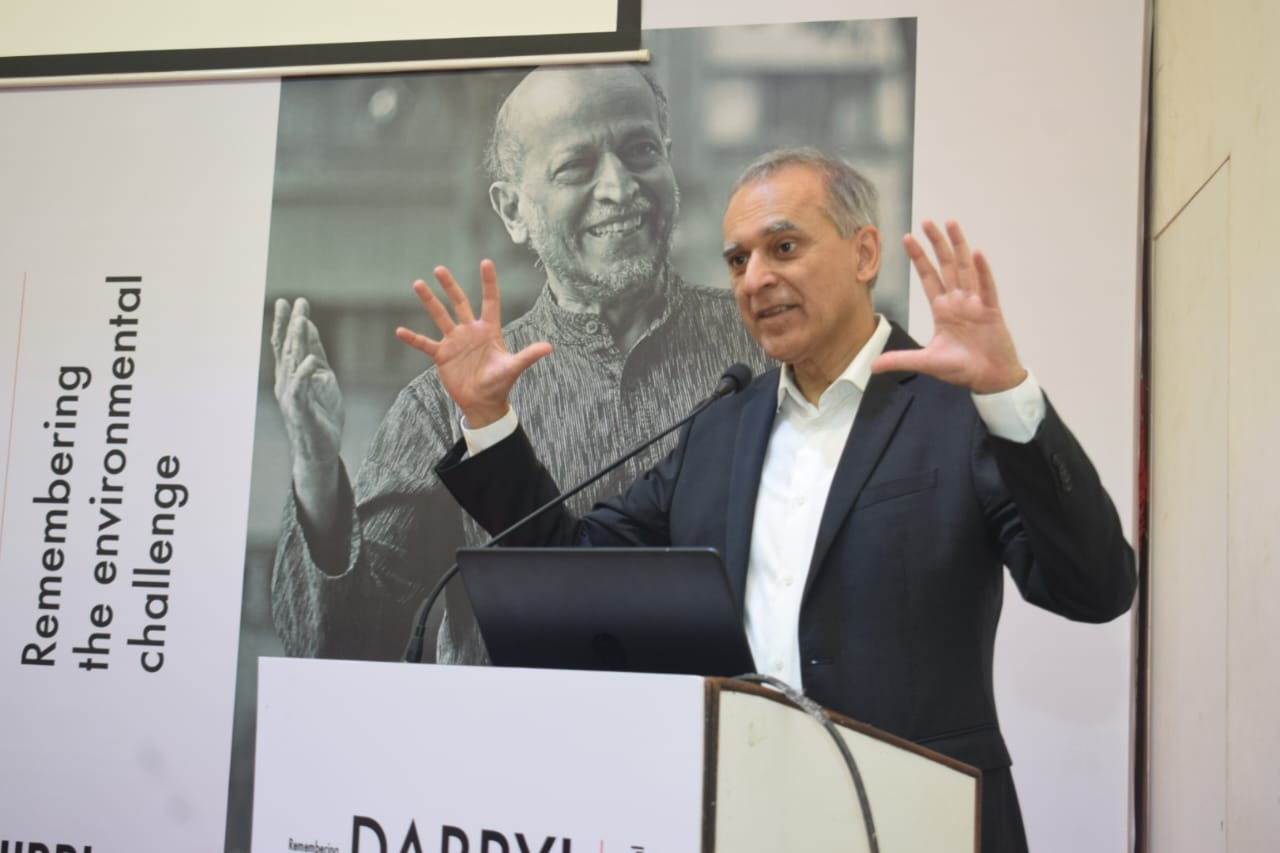
Speaking to a gathering of journalists convened by FEJI, Mumbai Press Club and Marathi Patrakar Sangh on the occasion of the first Darryl D’Monte Memorial Lecture to commemorate the late journalist, Sukhdev gave examples to highlight what this ‘invisible economy’ was.
Sukhdev cited the ‘rainfall factories of the planet’ covering the Amazon, sub-Saharan Africa and Indonesian archipelago as generating nearly 20 billion tonnes of moisture that evaporate due to the North East trade winds and fall as rain over Uruguay, Paraguay, Argentina and the Mato Grosso region of Brazil, which in turn produce half the world’s food from this rainfall system.
“How much does the granary of Latin America pay for this freshwater? The answer is zero. This is the invisible economics of nature”, explained Sukhdev; “We fail to understand values unless it is in economic terms.”
Closer home, Sukhdev outlined current agriculture, livestock and fishery policy and practice as causing complex environmental damage to both land and sea ecosystems. Huge investments in agriculture, he explained, included technology to extract more water from soils, add more chemicals, produce more harvests, that need more transportation, including shipping, that produces carbon emissions, making food the third-largest waster in the world.
“Global food production is responsible or 56 percent of total carbon emissions in the world of climate change”, he said.
Sukhdev added that health issues from these large-scale conventional systems was still not sufficiently highlighted, outlining India’s livestock industry using antibiotics leading to antibiotic resistance or herbicides causing high risk of cancers.
“Not only is it a massive environmental problem, today’s food system is a broken system” said Sukhdev, “We need to protect ourselves, otherwise we are accelerating our own destruction. It is time for people in India to wake up and insist on including natural economics into policy”, he concluded.
Sukhdev works globally with senior government officials, asset managers and information technology experts to methods to transition themselves to greener, sustainable techniques.